





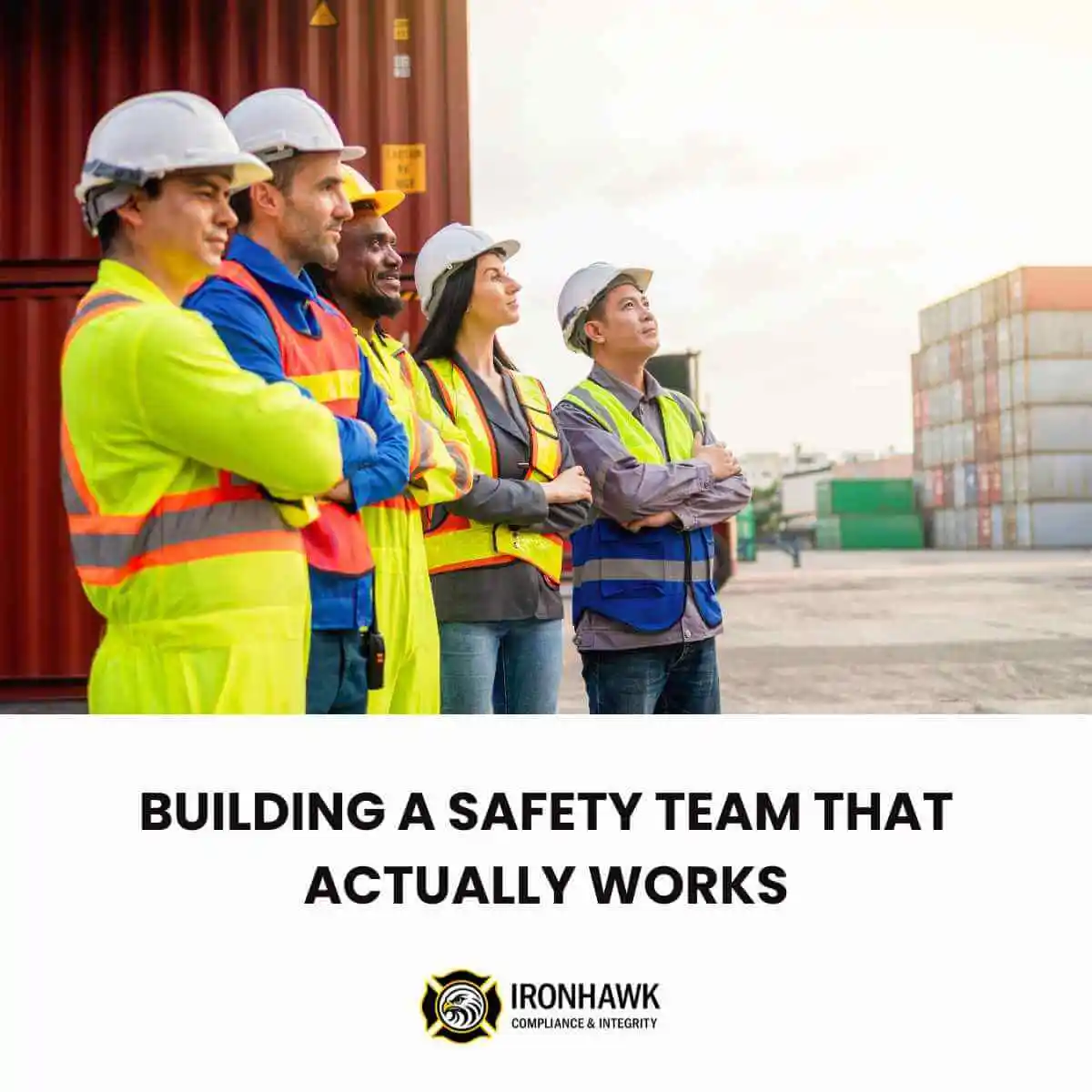
Having a safety team is one thing. However, having a group of individuals dedicated to driving safe practices in your organization…Well, that’s another thing entirely. While organizations have safety teams on paper and rules to mitigate risks, real measures go beyond the checklist.
Building a team dedicated to safe practices is more than meeting once a month, checking off agenda items, and leaving without real impact. Here’s how to build a strong team operating under the best practices, improving EHS training, streamlining communication, and truly putting safety first on the job site and beyond.
What Is a Safety Team?
A safety team is a group of employees who take an active role in identifying hazards, improving processes, and building communication around safety goals.
They go by many names, including on-site safety teams, workplace safety committees, and EHS teams. However, their purpose is the same: to make safety a shared responsibility.
The most effective safety teams aren’t made of rule enforcers; they’re made of people who care enough to speak up. They connect management’s vision to the realities of day-to-day work, turning information into action.
When done right, safety teams help organizations stay proactive instead of reactive. They prevent small problems from becoming major incidents, and they do it by focusing on collaboration, training, communication, and leading by example, not punishment.
Key Roles and Responsibilities
Every safety team should focus on having a structure instead of building a hierarchy. Remember, it’s not about titles. It’s about ownership.
A balanced team includes a safety team leader to guide meetings, a mix of team members from across departments, and management representatives who can make decisions and remove roadblocks.
That diversity is what makes it work: different perspectives reveal different risks. Typical safety team responsibilities include:
- Conducting walk-throughs and inspections.
- Gathering and communicating feedback from employees.
- Reviewing incident trends, identifying root causes, and improving risk mitigation.
- Supporting training and toolbox talks.
- Leading by example, even when no one’s watching.
When every member understands both the “what” and the “why,” safety stops being a policy and becomes part of how people operate.
Leadership Roles
Every strong team needs a clear point of focus, which is where the safety team leader comes in. This person coordinates meetings, tracks action items, and ensures communication flows between employees and management.
A safety team leader’s job description typically includes:
- Facilitating safety team meetings and setting agendas.
- Tracking and reporting incident trends or near-misses.
- Supporting compliance audits and inspections.
- Promoting safety awareness through training and communication.
- Following up on corrective actions and improvement plans.
- Representing the team’s findings to leadership.
The right leader does more than simply manage tasks. It’s a role building trust, engaging participation, turning feedback into progress, and setting the ultimate example/tone of what your team’s culture should be.
How to Build a Safety Team That Works
If you’re forming or rebuilding a team, purpose isn’t just important; it must be your starting point. You need to define what you want to solve and identify who can help you solve those issues. Here’s how effective organizations do it:
- Define clear goals. Set expectations that go beyond compliance—focus on communication, prevention, and accountability.
- Choose engaged members. Pick people who care, not just those with time on their calendar.
- Provide the right training. Safety team training should teach communication, observation, and leadership—not just procedure.
- Meet with intent. Keep safety team meetings short, focused, and purposeful. Rotate topics, use real examples, and encourage open discussion.
- Recognize progress. Celebrate milestones, share lessons learned, and keep the conversation going.
The goal is to create a rhythm of participation, where meetings lead to action, and action builds trust. Communication is key here, and it must be open with your team’s purpose as the cornerstone of everything you collectively do.
Keeping Safety Teams Engaged
Establishing your on-site safety team is only the beginning. It’s important to keep teams engaged and active in the process. Otherwise, your overall safety culture may start strong, but is sure to fade over time.
This is already an uphill battle, as employee engagement on average is at its lowest since 2015.
Motivation fades when people feel unheard. A great safety team stays active by keeping communication open and meaningful.
Encourage members to bring forward field observations, improvement ideas, and even frustrations. Use safety team meeting ideas that involve everyone. For example, short walk-throughs, scenario discussions, or reviewing recent near-misses as a group.
Small things build ownership:
- Rotate meeting leadership.
- Highlight success stories from the field.
- Include fun, practical safety team-building activities that strengthen relationships.
These steps keep safety visible, human, and fresh, by turning “another meeting” into real engagement.
Safety Team Building Activities
When people know and trust each other, communication improves, and hazards surface faster. Having team-building exercises is a great way to build that trust, let loose a bit, and demonstrate topics effectively.
Safety team-building activities don’t have to be elaborate. Sometimes the most effective ones are simple exercises that build trust and awareness:
- Field walk-alongs: Pair employees from different departments to identify potential hazards together.
- “What could go wrong?” drills: Use mock scenarios to practice spotting issues before they escalate.
- Safety story swaps: Let team members share close calls or lessons learned from past jobs, as these stories teach better than any slide deck.
- Mini challenges: Small competitions, like spotting unguarded equipment or identifying PPE improvements, make awareness fun and memorable.
The goal isn’t to gamify safety. These activities remind people that awareness, communication, and teamwork are what keep everyone safe.
Safety Team Meeting Ideas and Topics
A good safety team meeting keeps momentum, not minutes. Every session should bring value, spark discussion, and lead to action. Some meeting ideas and topics that encourage participation include:
- Reviewing recent near-misses or positive safety observations.
- Highlighting a department’s success story or improvement win.
- Discussing seasonal or operational risks (heat stress, maintenance outages, new equipment).
- Inviting a guest from another department to explain their biggest daily safety challenge.
- Brainstorming updates to safety signage, procedures, or onboarding materials.
- Rotating who leads discussions doesn’t just keep things fresh and inclusive, but also adds to everyone’s participation.
Furthermore, it’s not just about holding a safety meeting to fill time. You want your purpose to be at the forefront. A focused 20-minute meeting that drives real change beats a one-hour meeting that just fills time.
Safety Team Name Ideas
What’s in a name, right? Well, how you identify your team may play a bigger role than you think.
For starters, it’s a major part of communicating within your organization, by telling people what the group stands for and how seriously the organization takes safety.
The right name for your safety team is also a great way to engage members while staying organized.
What you choose will vary from company to company. Just make sure it’s memorable and easy to communicate. Here are some tips on how to decide on a name:
- Reflect your culture. Pick a name that fits your environment by choosing something that is professional, high-risk, or community-driven. The best names sound like you.
- Focus on purpose, not perfection. Choose words that represent protection, vigilance, or teamwork. “The Shield” says more than “The Committee.”
- Keep it short and strong. Two or three words max. Easy to say, easy to remember, easy to wear on a hard hat or banner.
- Use insider language. Borrow a term or phrase your workforce relates to. For example, something from the field, a process, or a shared value.
- Avoid clichés. Skip names that sound generic or overly corporate. Authenticity builds respect faster than buzzwords.
- Consult your team. The best names come from collaboration. When people help create the identity, they take ownership of it.
Build Better Safety Teams
When a safety team truly clicks, the impact reaches far beyond reducing incidents.
You start to see people watching out for one another, raising concerns early, and taking ownership of every outcome.
It’s a culture that goes beyond compliance and into true commitment, where getting the job done safely becomes the main focus.
At IronHawk Compliance & Integrity, we help organizations build leaders, open the door to honest conversations, and secure the foundation that empowers operations to thrive. Contact our team today and build effective safety teams that deliver, no matter your operation’s needs.
Sources:
Gallup. Accessed February 2026.